Showing posts with label Cooking Tip. Show all posts
HOW TO KEEP FRIED FOOD CRISP
THE DILEMMA For lunch, you fry up a big batch of chicken. You place it on a nice platter and call everyone to the dining table. But once you take a bite, you find that the skin is already quite soggy. Is there a way to prevent this? How do you make sure that fried food stays crisp?
WHAT TO DO What’s the key to crispy fried chicken? Using a simple kitchen utensil can help you keep that satisfying crunch. Even after you take food out of the hot oil, the residual heat continues to cook the chicken for a few more minutes. Placing it on a plate will trap the heat under it, and in turn, create steam. This is how you end up with soggy food. To keep food crispy, place it on a wire rack immediately after taking it out of the frying pan. This allows excess oil to drain, and it provides room for air to circulate. To serve, simply transfer the wire rack to a platter. This technique can be applied to any kind of fried food—potato wedges, fish, tempura, shrimp, or even turon!
WHAT DO YOU DO WITH LEFTOVER CHRISTMAS HAM?
“Instead of bacon, leftover Christmas ham is added to my chicken and corn chowder. I also use slices of ham to make spinach-stuffed chicken breasts and Parmesan cheese tacos, an all-time favorite. Even if it’s done days after the 25th, preparing these dishes makes us feel like we’re still celebrating Christmas!”—Mari cel Ladim
“Whenever I see leftover Christmas ham at home, the fi rst thing that comes to mind is breakfast! I like making a frittata with generous slices of ham. To make it even richer, I add some Gruyère cheese and spinach to the mix. Yum!”—James Paolo Razal
“A lot can be done with leftover ham! Save the bones to make a fl avorful broth or stock. Add leftover slices of ham to a bean casserole or stews like menudo for a richer dish. You can also use ham in sandwiches, vegetable salads, or fried rice. The possibilities are endless!”—Jls A. Rueda
“I make ham and cheese sticks. Cut cheese into logs and wrap them with ham slices. Dip the sticks in tomato sauce, and then coat it in Japanese breadcrumbs. Using tomato sauce is an ingenious way to add zing to the cheese sticks and hold the breadcrumbs together. Deep-fry until golden brown and serve immediately.”—Wendy Yu
“December mornings are always best spent with a grilled ensaymada, topped with slices of Christmas ham and shavings of queso de bola. Best paired with a cup of thick hot chocolate, of course!”—Edna Domingu ez
“Ever heard of ham lumpia? It’s my modifi ed version of the usual lumpiang Shanghai. Instead of ground pork, I use ham strips and bean sprouts. Fried to golden perfection, this never fails to please the whole family. Adding ham to any simple vegetable dish gives it an instant oomph!”—Anthea Rima Rivera-Laput
“We all love ham at home, so it would be a miracle if there are any leftovers at all! But if we happen to have some, here's what I usually do. I freeze the leftover slices and save it for future use, in recipes like homemade pandesal pizza, carbonara, ham roll-ups fi lled with cheese, or even breakfast omelets with potatoes. I also like making savory ham muffi ns with cheese, bell peppers, onions, and garlic."—Meg Isleta
“Whenever I see leftover Christmas ham at home, the fi rst thing that comes to mind is breakfast! I like making a frittata with generous slices of ham. To make it even richer, I add some Gruyère cheese and spinach to the mix. Yum!”—James Paolo Razal
“A lot can be done with leftover ham! Save the bones to make a fl avorful broth or stock. Add leftover slices of ham to a bean casserole or stews like menudo for a richer dish. You can also use ham in sandwiches, vegetable salads, or fried rice. The possibilities are endless!”—Jls A. Rueda
“I make ham and cheese sticks. Cut cheese into logs and wrap them with ham slices. Dip the sticks in tomato sauce, and then coat it in Japanese breadcrumbs. Using tomato sauce is an ingenious way to add zing to the cheese sticks and hold the breadcrumbs together. Deep-fry until golden brown and serve immediately.”—Wendy Yu
“December mornings are always best spent with a grilled ensaymada, topped with slices of Christmas ham and shavings of queso de bola. Best paired with a cup of thick hot chocolate, of course!”—Edna Domingu ez
“Ever heard of ham lumpia? It’s my modifi ed version of the usual lumpiang Shanghai. Instead of ground pork, I use ham strips and bean sprouts. Fried to golden perfection, this never fails to please the whole family. Adding ham to any simple vegetable dish gives it an instant oomph!”—Anthea Rima Rivera-Laput
“We all love ham at home, so it would be a miracle if there are any leftovers at all! But if we happen to have some, here's what I usually do. I freeze the leftover slices and save it for future use, in recipes like homemade pandesal pizza, carbonara, ham roll-ups fi lled with cheese, or even breakfast omelets with potatoes. I also like making savory ham muffi ns with cheese, bell peppers, onions, and garlic."—Meg Isleta
KITCHEN USES OF LEMON AND SALT
THE DILEMMA You’d like to fi nd more natural ways to clean your kitchen, but organic brands can be a bit pricey. Are there natural cleaning alternatives that are more cost-efficient?
WHAT TO DO Aside from adding zest and fl avor to your dishes, lemon and salt can be used to clean your kitchen, too. Here are a few ideas. Garlic, onions, and fi sh can make wooden chopping boards smell a little funky. Get rid of the odors and clean your chopping boards by scrubbing the surface with lemon and salt.
A little elbow grease is all you need! To clean your microwave, slice a lemon in half and place on a plate cut side down. Microwave it for about a minute, then simply wipe away gunk with a towel. Clean and remove stains on your stainless steel sink by combining lemon juice and salt to make a paste. Apply this to the sink, scrub gently, then rinse with water. To remove dried-on spills on stovetops and ovens, make a paste out of lemon juice, water, and baking soda. Apply to spills, let sit for 15 minutes, then simply wipe away with a damp cloth.
WHAT TO DO Aside from adding zest and fl avor to your dishes, lemon and salt can be used to clean your kitchen, too. Here are a few ideas. Garlic, onions, and fi sh can make wooden chopping boards smell a little funky. Get rid of the odors and clean your chopping boards by scrubbing the surface with lemon and salt.
A little elbow grease is all you need! To clean your microwave, slice a lemon in half and place on a plate cut side down. Microwave it for about a minute, then simply wipe away gunk with a towel. Clean and remove stains on your stainless steel sink by combining lemon juice and salt to make a paste. Apply this to the sink, scrub gently, then rinse with water. To remove dried-on spills on stovetops and ovens, make a paste out of lemon juice, water, and baking soda. Apply to spills, let sit for 15 minutes, then simply wipe away with a damp cloth.
HOW TO CHOOSE THE RIGHT TYPE OF PASTA FOR A SPECIFIC SAUCE
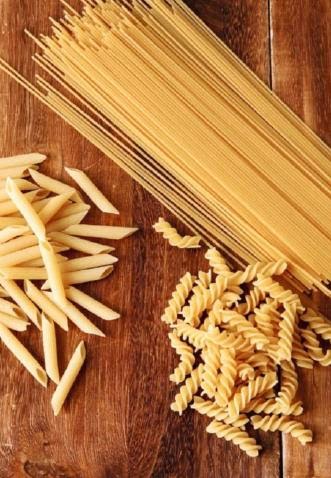
THE DILEMMA Tubes, twists, ribbons, shells, round, flat, short and long grocery shelves are packed with pasta in different shapes and sizes. How will you know which one to use for a certain dish?
WHAT TO DO Matching the right pasta shape to the right sauce certainly makes for a better dish. Here are a few simple tips to keep in mind. The versatile spaghetti can be matched with meaty tomato, creamy seafood, broth or oil-based dishes. Quick-cooking, delicate angel hair pasta is best paired with thin oil, tomato, or broth-based sauces.
Linguine and fettuccine pair well with creamy sauces that are medium to thick in consistency. Tube-shaped pastas like penne, rigatoni, and ziti work best with full-flavored sauces as the ridges allow them to retain sauces well. Try cream-based, chunky meat, or thick tomato sauces.
Jumbo shells, manicotti, and lasagna are known for their heartiness and solid consistency, so these are best stuffed or layered for baking. Remember to use a lot of sauce to provide enough moisture for the pasta to cook. Pair farfalle (bow tie pasta) with creamy sauces, or toss with olive oil, herbs, and finely diced vegetables. Elbow macaroni and fusilli are great for salads, and macaroni can also be used for everyone’s favorite sopas.
WHAT TO DO Matching the right pasta shape to the right sauce certainly makes for a better dish. Here are a few simple tips to keep in mind. The versatile spaghetti can be matched with meaty tomato, creamy seafood, broth or oil-based dishes. Quick-cooking, delicate angel hair pasta is best paired with thin oil, tomato, or broth-based sauces.
Linguine and fettuccine pair well with creamy sauces that are medium to thick in consistency. Tube-shaped pastas like penne, rigatoni, and ziti work best with full-flavored sauces as the ridges allow them to retain sauces well. Try cream-based, chunky meat, or thick tomato sauces.
Jumbo shells, manicotti, and lasagna are known for their heartiness and solid consistency, so these are best stuffed or layered for baking. Remember to use a lot of sauce to provide enough moisture for the pasta to cook. Pair farfalle (bow tie pasta) with creamy sauces, or toss with olive oil, herbs, and finely diced vegetables. Elbow macaroni and fusilli are great for salads, and macaroni can also be used for everyone’s favorite sopas.
Subscribe to:
Posts (Atom)